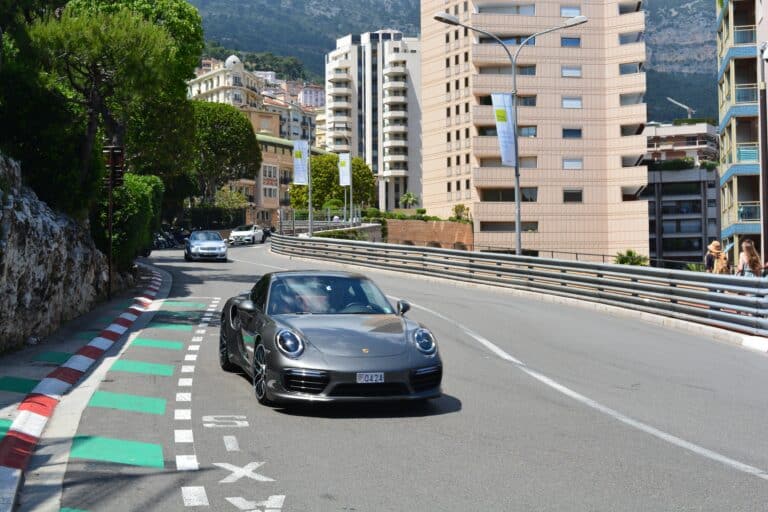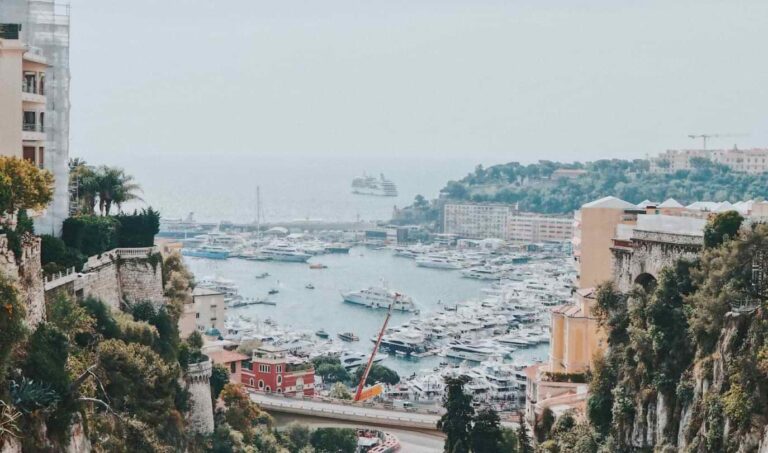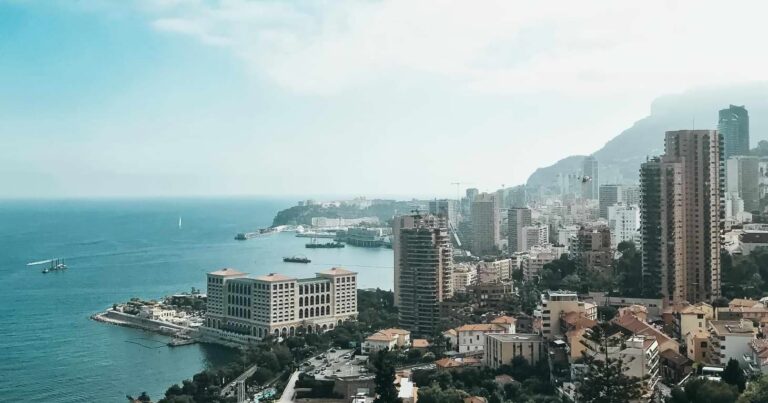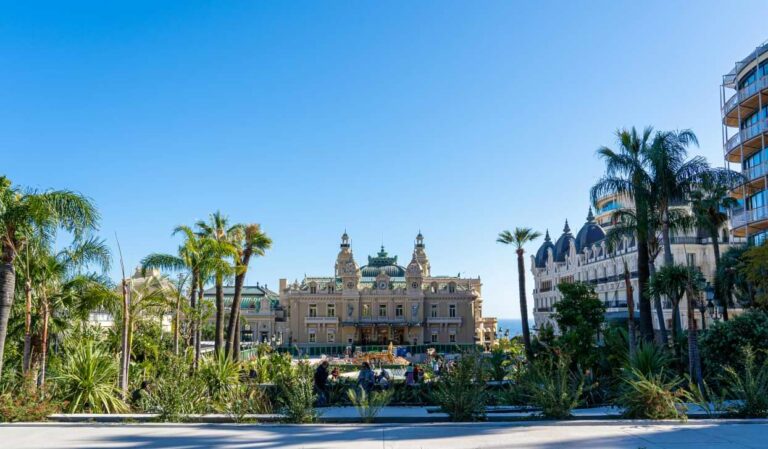
The Principality of Monaco is located in Western Europe and is one of the smallest countries in the Eurozone and the world, with an area of only 2 km². This small country of fewer than 40,000 inhabitants is well known among tourists for its luxury, casinos, Formula 1 Grand Prix, and beautiful sites.
However, it is also very attractive as a permanent residence, offering security, social and economic stability, quality education, and healthcare systems (see the article “Healthcare in Monaco”) and, above all, no personal income tax and no capital-gains or annual property tax for individuals, although one-off registration duties and notary fees do apply to real-estate transactions.
It is no coincidence that Formula 1 champions like Lewis Hamilton, Max Verstappen, Charles Leclerc, and Lando Norris, among many other elite athletes and business leaders, have chosen this destination to reside: it is said that one out of every three residents in Monaco is a millionaire, and it is the country with the second-highest per-capita income in the world.
Monaco has the highest density of ultra-high-net-worth homeowners (individuals with $30M+ net worth) anywhere in the world, according to Altrata’s 2025 residential real estate report, cementing its position as the ultimate destination for the global elite.
Attractive beaches, luxury, zero income tax, legal security, and an idyllic place to live next to the Côte d’Azur make Monaco the paradise of the mega-rich.
Acquiring (or renting) a home is one of the mandatory requirements for anyone who wishes to obtain Monegasque residency. Getting professional advice is therefore crucial, both for immigration and for the purchase process itself.
Current situation of the real-estate market in Monaco
Monaco is, as of today, the most expensive high-quality residential location in the world, so people wishing to move their residence to Monaco should be aware that both buying and renting will not be suitable for all pockets and that this may imply a “hidden cost” compared with not having to pay income tax.
The prices of the square metre have a clear explanation in two factors:
- High demand for housing by millionaires who want to move their tax residence to Monaco to avoid paying taxes or invest in Monaco to protect their wealth.
- Very limited supply due to its orography: Monaco is cloistered between the mountains and the sea, a fact that prevents the country from developing spatially.
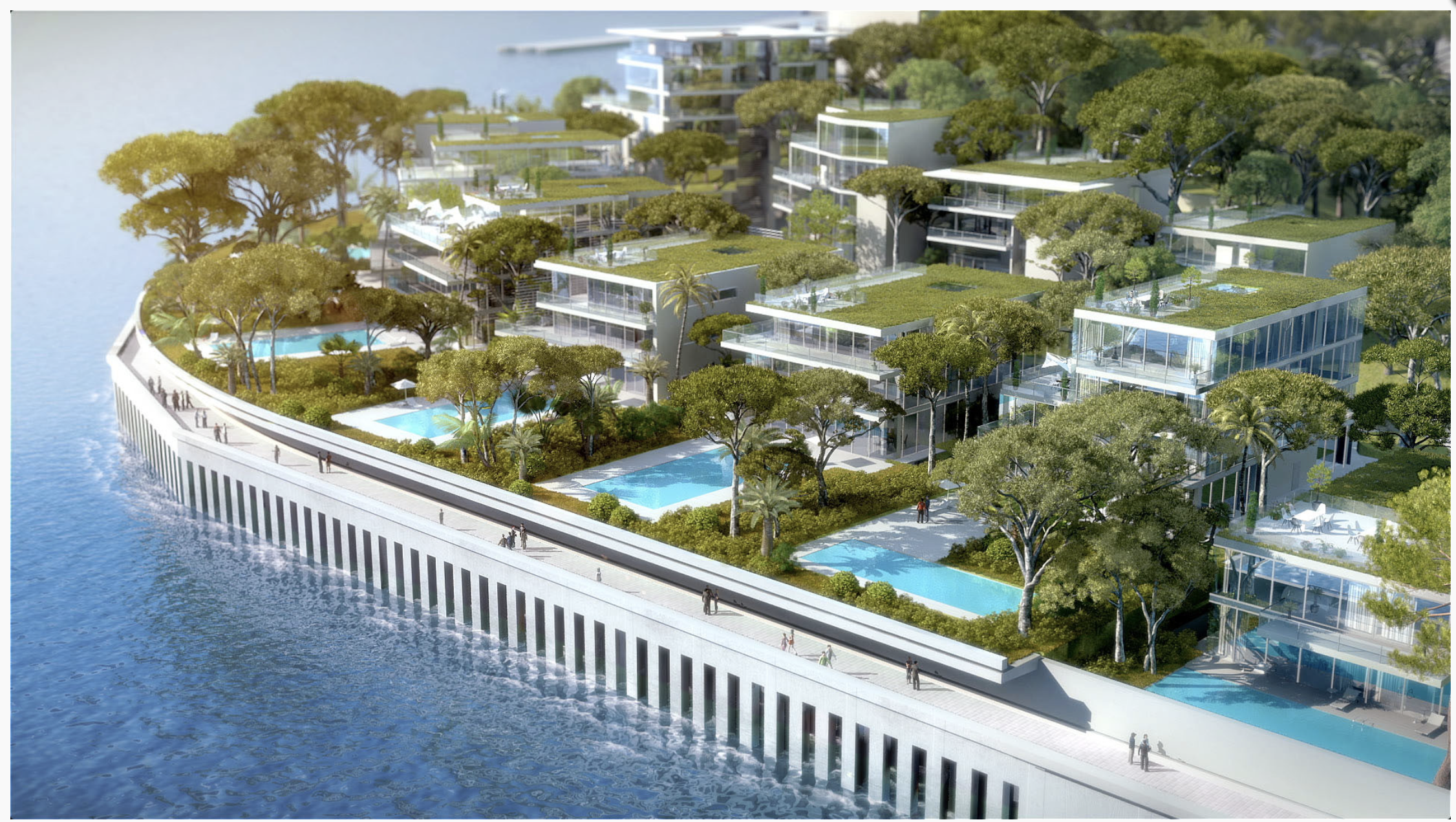
The land reclamation project Mareterra (also known as Portier Cove) is creating new land from the sea, adding six hectares (around 15 acres) to the Principality’s coastline.
Real-estate prices in Monaco: an excellent market for HNWI
As a result, the prices of its housing (both for sale and rent) are exorbitant and within the reach of very few. The square metre can be 100 % more expensive than in New York, or even 200 % more expensive than in Paris.
According to the latest IMSEE data, the average price of housing in the Principality has reached approximately €52,000 per square metre in 2025, representing sustained growth of 44.3% over the past decade. Prime new-builds, however, often transact far higher, consolidating Monaco as the most expensive place in the world to buy a home.
Monaco’s real estate market achieved an unprecedented €5.9 billion in total sales in 2024, the highest figure ever recorded. New property sales alone accounted for €3.7 billion—more than the combined total of all new property sales in the Principality between 2006 and 2021. Seven transactions surpassed the €100 million mark, highlighting the extraordinary level of wealth flowing into Monaco’s property sector.
Monaco is composed of the following districts: Monaco-Ville, Jardin Exotique, La Condamine, Les Moneghetti, Monte-Carlo, La Rousse, and Larvotto.
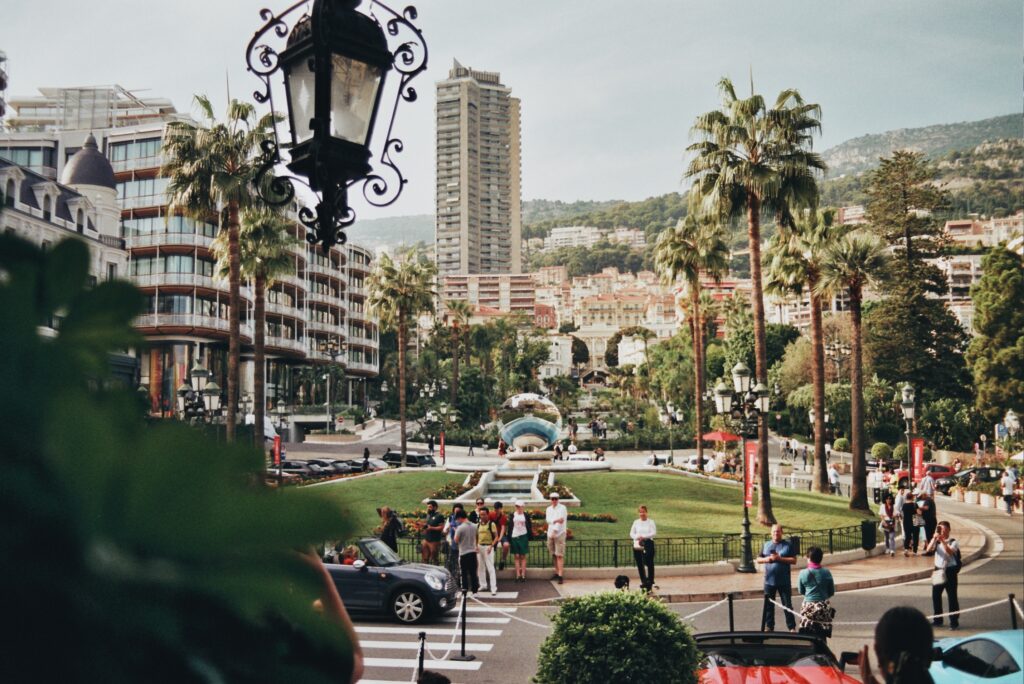
According to Monaco government statistics from 2022, half of Monaco’s districts saw year-over-year transaction volumes increase, mainly thanks to the sale of second homes.
The district of La Condamine is currently the district where the purchase of housing has increased the most due to a better quality/price offer. However, as usual, Monte-Carlo and La Rousse monopolise the majority of transactions and market demand.
In Monte-Carlo, the average resale price is around €54,000 per m², while Larvotto currently tops the list at €97,563 per m² in 2024 (though based on a limited sample size). Fontvieille and La Condamine also average around €54,000 per m².
Jardin Exotique, once considered “cheap,” has risen significantly and now averages close to €49,847 per m², reflecting a 36.43% increase driven by exceptional property sales in the neighborhood.
Most transactions still involve resale properties, but the strongest current demand is for larger family apartments (2–5 bedrooms). Studios are less dominant than in the past.
The market has shifted dramatically toward family homes. In 2024, three-bedroom properties reached an average of €56,106 per m² (up 5.1%), while four-bedroom and larger properties commanded €61,932 per m² (up 18.7%). This reflects Monaco’s evolution from a bachelor-pad destination to a family-friendly location with world-class schools and safety.
In this regard, due to the current geopolitical crisis, a lot of housing has come on the market. However, it comes with operational difficulties in terms of purchase.
The ultra-prime segment: Monaco’s “hypercars” of real estate
A new tier has emerged in Monaco’s real estate market: ultra-luxury properties exceeding €100,000 per square metre. According to industry professionals interviewed by L’Observateur de Monaco, these record-breaking prices are found primarily in Mareterra and select iconic buildings in the Carré d’Or.
“It’s comparable to the automobile world—there are mainstream cars, sports cars, and hypercars. These properties are the hypercars of real estate,” explains Gilles Graille of Pacific Agency.
Buildings reaching or approaching this threshold include:
- Mareterra (€100,000-€130,000 per m²)
- 26 Carré d’Or
- Le Mirabeau
- La Petite Afrique
- Park Palace
- Sun Tower
- Villa de Rome (Boulevard de Suisse)
“Properties at such astronomical prices mark the emergence of a new segment in Monaco’s real estate market: ultra-luxury,” notes Éric Cancemi of Miells Christie’s.
However, these exceptional valuations remain confined to a small number of truly outstanding properties where multiple criteria converge: prime location, highest-standing building, flawless renovation, and premium finishings.
The new-construction market
As we have mentioned, Monaco is a country with limited land, which translates into a relatively small number of new constructions each year, being of a very exclusive nature and often sold “off-market”.
Historically, new construction has represented only a small fraction, accounting for 5 % of total sales in the Principality in 2021.
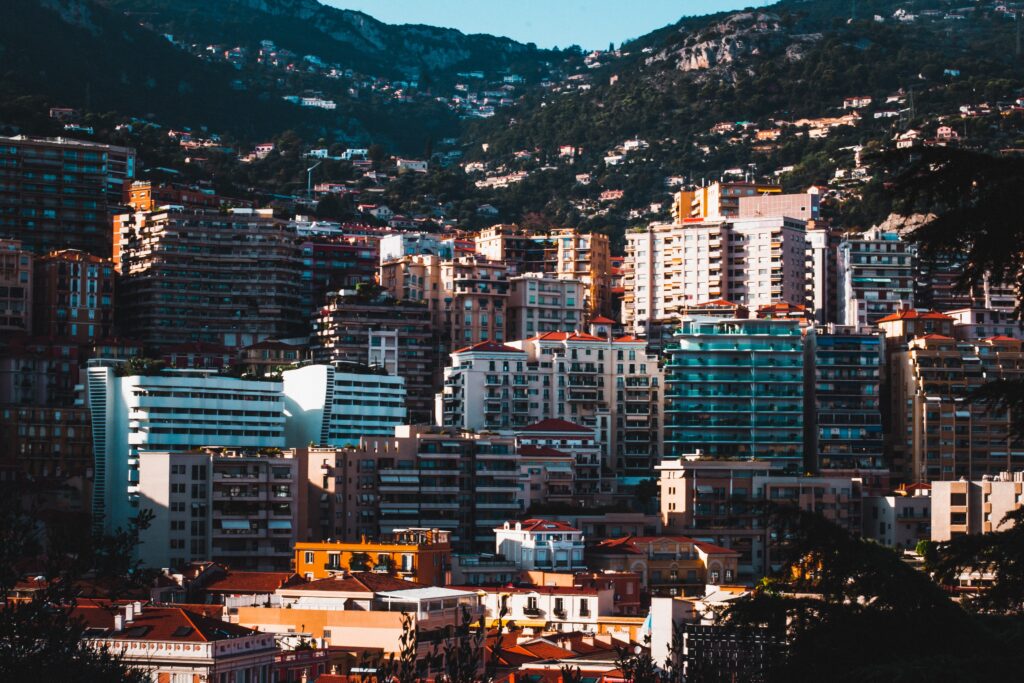
However, 2024 marked a historic turning point. Not since 1993 had Monaco seen such a high number of private-sector dwellings delivered in a single year—159 new residences were completed, with 130 of them in the Mareterra eco-district alone.
The flagship project Mareterra (also known as Portier Cove) is a €2.4-billion land-reclamation venture that adds six hectares (around 15 acres) of eco-engineered coastline between Larvotto and Monte-Carlo.
Inaugurated in December 2024, with final residential deliveries completing throughout 2025, the new district features a marina, waterfront park, and roughly 110 apartments plus 10 villas, expanding Monaco’s surface area by about 3 %.
The impact was immediate: Q1 2025 recorded €2.6 billion in residential sales—the strongest first-quarter performance ever recorded. New-build sales totalled €1.9 billion across just 42 transactions, representing an average transaction value of €45 million.
If you are interested in purchasing a property in Monaco’s most cutting-edge real-estate development, please do not hesitate to contact us.
The rental market: from little apartments to villas
In line with the sales market, Monaco is the most expensive place to rent a home, ahead of New York, Paris, Hong Kong, and Singapore. Following the downturn suffered in the COVID-19 pandemic, rental prices in Monaco have continued to climb, reaching an average of approximately €114.50 per m² per month according to Savills—the highest in the world.
By district, the Carré d’Or commands the highest rents at €190 per m² (reaching €229 per m² for 5+ room apartments), while Larvotto averages €115 per m². More affordable options exist in Moneghetti (€77 per m²) and La Condamine (€85-€99 per m²).
On average and from our experience, rents would range as follows:
- Studios or one-bedroom apartments: €3,000 – 6,000 / month
- Second-hand family housing: €5,000 – 15,000 / month
- New family housing: €15,000 – 40,000 / month
- Villa or luxury: €40,000 – up to €200,000 / month
There are duplex apartments in Le Carré d’Or that rent for more than €200,000 per month.
The rental market is complicated and buoyant, so opportunities come and go and this is very profitable for the owners—especially when letting properties during events such as the Monaco Grand Prix or over the summer.
Additional up-front costs for renters:
- Agency fees: 10 % of the annual rent (excluding service charges)
- Registration fees: 1 % of the total rent and charges for the first three years, payable upfront when registering the lease (and again on renewal).
- Administrative tax stamps (fiscal stamps)
- Check-in / inventory fees: according to the current tariff of the appointed expert company
Landlords normally pay an equivalent 10 % agency commission when a new rental mandate is signed.
Costs, fees & compliance requirements for property acquisition
Monaco levies no capital-gains tax on property sales and no annual property or housing tax, but several one-off duties and professional fees apply when property changes hands.
1. Sale / purchase duties & notary fees
- New build or off-plan (en l’état futur d’achèvement): total 2.5 % of the purchase price (1.5 % notary, 1 % registration)
- Individual buyer / Monaco civil company (SCI): total 6.25 % (1.5 % notary, 4.75 % registration)
- “Marchand de biens” regime (professional trader): 1.5 % notary. Property must be resold within 4 years or a 6 % penalty plus 4.75 % transfer duty applies
- Purchase of shares in a Monaco SCI holding real estate: 4.75 % registration duty (plus notary/legal fees)
- Acquisition through an offshore or foreign company: 10 % registration duty + 1.5 % notary
- Life-annuity purchase (viager): 6.25 % in total (1.5 % notary, 4.75 % registration) calculated on the bouquet plus ten years of annuities
- Mortgage inscription: 0.92 % of the loan amount (additional bank/legal costs may apply)
2. Real-estate agency commissions – indicative scale
| Transaction type | Seller pays | Buyer pays |
|---|---|---|
| Sale of real estate (completed or cancelled through the parties) | 5 % | 3 % |
| Sale of business / industrial assets | 6 % | 3 % |
| Assignment of lease or lease rights | 6 % | 3 % |
| Sale of a business – exercise of the right of first refusal | 6 % | — |
| Exchange of real estate or business assets | 5 % | 5 % |
| Management of a business or industrial assets (max 3 years) | 5 % | 5 % |
3. Know-Your-Customer (KYC) & anti-money-laundering obligations
Before a notary can execute a deed of sale, buyers must prove the lawful origin of their funds by providing bank statements, income records, tax returns, and any other documents requested under Monaco’s anti-money-laundering (AML) rules in line with FATF standards. This is a regulatory requirement rather than a fee, but failure to satisfy it will halt the transaction.
4. Financing options
Although many buyers pay cash, Monaco-based private banks offer mortgage facilities specifically designed for the Principality’s market. Approval is subject to detailed due-diligence and compliance reviews.
5. Working with legitimate professionals
Monaco is currently undertaking a major legislative cleanup of the real-estate sector. With over 160 agencies and numerous unauthorized operators (concierge companies, multi-family offices, property traders) all collecting fees without proper licensing, the government has introduced strict new regulations to professionalize the market.
“The exceptional value of Monaco’s real estate inevitably attracts individuals tempted to cash in without the required authorizations or guarantees of integrity and professionalism,” explains Nicolas Croesi, National Council member and real estate broker.
Working with established, licensed professionals is essential to ensure proper legal compliance, AML due diligence, and protection of your investment in this highly regulated market.
How to buy a property in Monaco
Monaco is a country so small that it is measured in acres, not miles. The whole of the principality could fit into New York’s Central Park. Yet as diminutive as it is, Monaco is the international epicentre of glamour.
Working with authorized Monaco real estate professionals
Are you interested in purchasing a property in the luxurious and prestigious Monaco? It’s important to understand that under Monegasque law, only licensed real estate agents registered in Monaco are legally authorized to show, market, and facilitate property transactions within the Principality.
Monaco Relocation Group does not hold a Monaco real estate license and therefore cannot directly show or sell properties. However, we work exclusively with our trusted Monegasque partner, Stephen Blanchi, a fully licensed and authorized real estate professional in Monaco, to ensure you receive proper representation throughout your property search.
Contact us through the contact form, through Whatsapp or by writing to [email protected] to schedule a consultation. We’ll connect you with our licensed partner and guide you through your journey toward Monaco residency.
If you wish to receive our free in-depth report “The definitive guide to living in Monaco”, which covers the tax framework, residency rules, and lifestyle tips in even more detail, please download it from the section below.
 All communications are encrypted and will be treated with absolute confidentiality. Your data will never be shared with third parties.